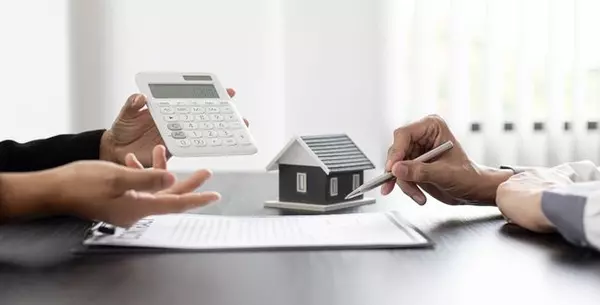
Owning vs Renting
Owning your own home might be one of the defining qualities of the “American Dream:” the set of ideals that includes opportunity for prosperity and success and an upward social mobility for the family and children, achieved through hard work. Home ownership is surely ingrained as one of the strongest representations of that vision—66% of Americans own their own home, and more hope they will or wish they did.
Something about home ownership plucks a strong chord with Americans. Financial security, permanency, status, and pride are values many of us seek.
Lifestyle plays a big role in the decision to own versus rent. Home buying is most often driven by household formation, such as marriage and growing a family. Less than 40% of people under 35 years old own homes, 60% of people over 35 years old own homes, and more than 80% of people 65 years old or over own homes. Interestingly, for the millennial generation, the primary reason for buying a home? Owning a dog.
The U.S. homeownership rate has fluctuated between 62% and 70% since the 1950s. Most young people begin their independent lives renting an apartment, maximizing lifestyle flexibility and minimizing the hefty upfront costs associated with purchasing a home. As they build careers, save money, and start families, many choose to buy a home, recognizing that home ownership, as opposed to rental living, is more appropriate to their growing family needs.
At the other end of the age spectrum are homeowners nearing retirement who may desire to sell their homes, downsize, avoid the maintenance and other obligations, and go back to renting.
WHICH IS BEST?
Is it better to rent or buy a home? Most adults ask themselves this at some point as they form their goals and plan for the years ahead. Before you answer the question, here are some things to ask yourself. Owning and renting each have their advantages, but what’s best for you depends on your circumstances.
What will be the duration of your stay in the home? Each market is different, but whether the time you plan to spend in the house warrants its purchase is possible to predict. In general terms, it takes four to seven years to break even on a home (i.e., where there has been enough appreciation to pay back the cost of the transaction and cost of ownership). If you’re thinking about buying a home and selling it in two years, buying is very unlikely to be cheaper than renting.
Do you think of or need your house as an investment in your retirement plan? Many Americans see their homes as a valuable asset, often integral to their retirement strategy. Real estate is commonly regarded as a solid long-term investment, frequently favored over other options like stocks, gold, or savings accounts. Its appeal lies in the potential for value appreciation over time. However, it's wise to remember that the real estate market is subject to fluctuations. Property values can both increase and decrease, influenced by various market and economic factors. This reality highlights the importance of considering real estate as one component of a diversified investment portfolio, recognizing both its potential benefits and inherent risks.
Are you financially ready? Owning a home is a financial commitment that requires planning how home ownership fits into where your life is headed. Ask yourself what your budget is and if either buying or renting would require you to stretch your finances. Crunch all the numbers. A frequent mistake of first-time home buyers is comparing a month’s rent to a month’s mortgage payment. Many people don’t have all the numbers. There are many additional fees necessary to include to make a fair comparison: principal interest, property taxes, property insurance, homeowners’ association (HOA) fees, and ongoing maintenance.
Are you prepared for the down payment? This is the lump sum payment that funds your equity in the property (how much of the property you actually own). Down payments vary; 20% is preferred and gets the best rates. There are some loans that allow down payments as low as 3%. Sometimes relatives help with the down payment. If you have a choice, take a gift rather than a loan because lenders will add the loan debt to other monthly obligations and potential mortgage payments to determine your debt-to-income ratio, which generally can’t top 43% to qualify for a home loan.
Can you afford the monthly mortgage and its components? Generally, a mortgage includes loan principal and interest (both amortized over the life of the loan) plus homeowner’s insurance and property taxes (prorated). These items can affect the monthly loan-only payment by several hundred dollars.
Are you emotionally ready? Can you handle the stress? A big factor to consider when buying a home is stress. The Holmes and Rahe Stress Scale, a landmark stress study, ranks many events that go along with buying a home in the top 43 most stressful circumstances in life. Four events are specifically home-related: change in financial state (No. 16), large mortgage or loan (No. 20), change in living conditions (No. 28), and change in residence (No. 32). If someone has recently made other life changes, such as marriage (No. 7), switching careers (No. 18), or having a child (No. 14), it might be wise to postpone buying a home. Stress overload can lead to missed payments, which can result in destroyed credit or even losing the home. It’s better to rent if your life is in flux and then buy when your stress levels are lower.
Are you ready for commitment? Are you ready to make lots of decisions, from picking a real estate agent to picking paint colors? Are you confident enough to choose a neighborhood where you believe home values will continue to appreciate and that will serve your needs (i.e., proximity to schools, shopping, recreation, etc.)? Are you ready for devoting the time and attention to maintaining a home (i.e., leaf-raking, grass-cutting, appliance maintenance and repair, etc.)? Taking care of your biggest investment can be gratifying, but only if you’re ready.
Recent Posts